
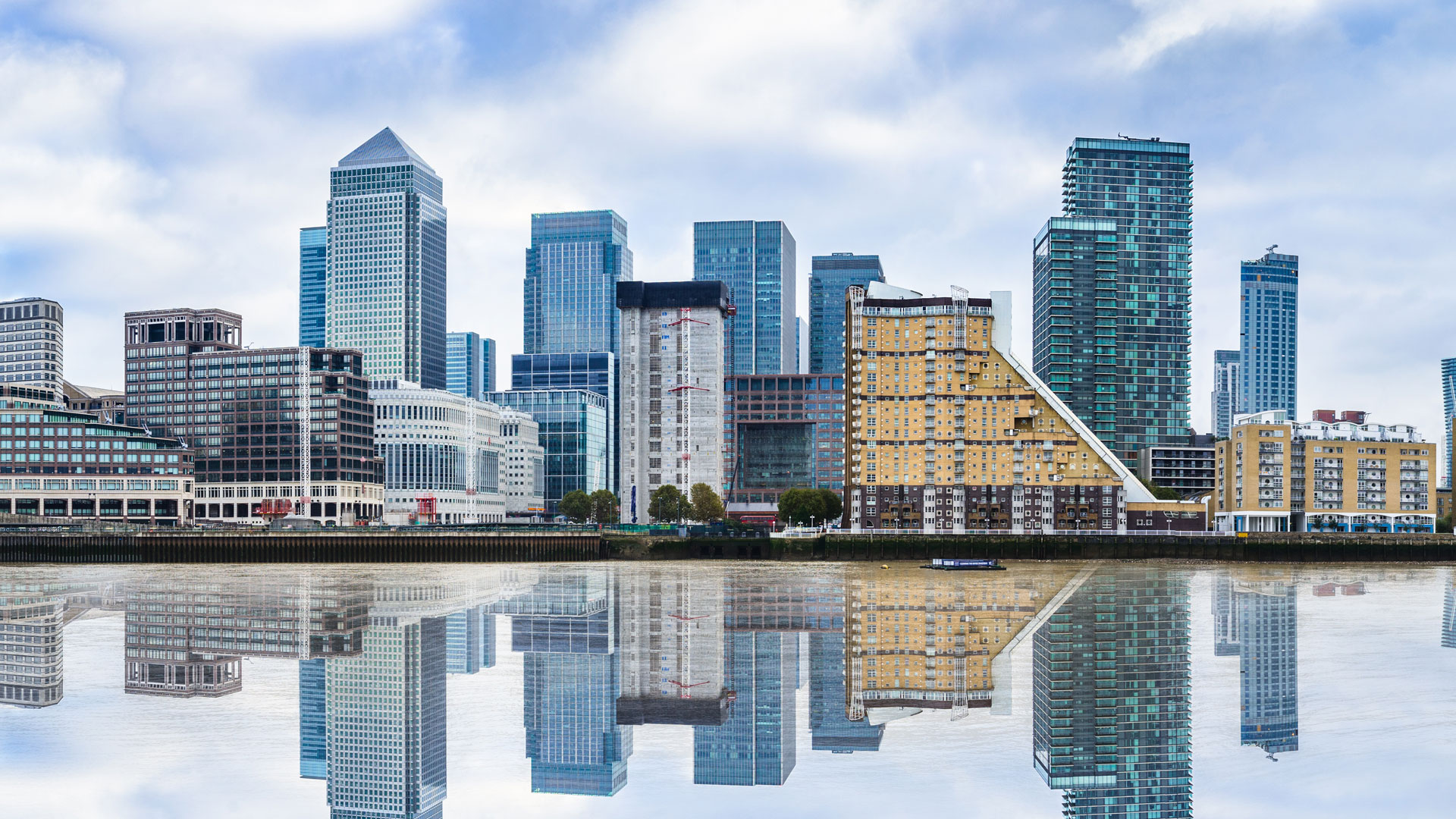
Reading the news and you would find it hard to believe that the FTSE 100 hit its all-time intra-day high in July 2026, showing that markets can still move ahead even when the news feels unsettled.
Some areas improved, some risks increased, and investors ended the month asking familiar questions: where next for interest rates, energy prices and technology shares?
In his first remarks outside Number 10, Burnham struck a conciliatory tone, acknowledging that “we have not been good enough” and pledging to “regain our stability”, though his immediate Cabinet changes were more brutal with several senior figures, including the outgoing Chancellor, departing that same day.
The most consequential early decision was at the Treasury. Rachel Reeves was replaced by John Healey, the former Defence Secretary, rather than Wes Streeting or Shabana Mahmood, as some had speculated. Commentators and markets initially read Healey’s appointment as a fiscally cautious signal, but that relief proved short-lived. Within hours of taking office, Burnham told reporters his government would stick to Labour’s existing fiscal rules but “use any flexibility within them”.
Two words, “fiscal flexibility,” were enough to unsettle the bond market. Ten-year gilt yields rose to just over 5.03%, and the pound gave back its earlier gains. This was another reminder of how thin the market’s patience has worn since the 2022 Truss mini-budget, and how closely investors will now scrutinise Burnham’s Autumn Statement and any moves on capital gains tax, pensions or property, all of which he has previously suggested are undertaxed relative to income.
There was better news on inflation. UK CPI eased to 2.6% in June, a 15-month low, helped by softer food and fuel prices, an early positive data point for the new administration. However, the respite may not last. Energy costs are expected to feed through to household bills and the Bank of England has previously projected inflation rising back over 3% later in the year as a result.
The Bank of England’s Monetary Policy Committee met on 30th July, for a “Super Thursday” decision accompanied by a fresh Monetary Policy Report and Governor Andrew Bailey’s press conference. Markets and economists had predicted the hold at 3.75%. It was the fifth consecutive hold – though the vote split will be watched closely after June’s 7-2 decision showed a widening hawkish minority.
Chief Economist Huw Pill has already said publicly that rates will likely need to rise over the coming year, and swap pricing implies Bank Rate could approach 4.00-4.25% within the next six to twelve months if services inflation, still running at 3.6%, stays sticky. A lot depends on oil prices. Brent crude spiked above $100 a barrel in mid-July as fighting between the US and Iran resumed, before falling as a fresh pause in hostilities took hold in the final days of the month.
The most positive headlines came from UK equity markets, as seen in the performance of the FTSE 100. The UK’s flagship index seemed headed for a new milestone at the turn of the year as it quickly marched towards an unprecedented 11,000, closing at 10,910.55 on 27th February 2026. That seemed a long way off when war in the Middle East broke out, but more achievable when it reached a record intraday high of 10,989.45 on 31st July.
Once again, UK equity markets are benefitting from a diversification away from technology exposure amidst persistent concerns about the investment costs of Artificial Intelligence. As we will see below, the ‘AI bubble’ theme is not going away.
United States
US equities began July in fine form before a bruising final week, with The Dow Jones Industrial Average pushing above 53,000 for the first time on 6th July. That momentum unwound sharply in the last few days of the month. Chip stocks led a global sell-off after reports that SK Hynix plans to slow expansion of its high-bandwidth memory production, and after news that a Chinese manufacturer had begun mass-producing deep ultraviolet lithography equipment, reigniting fears that Beijing is closing the technology gap in advanced chipmaking faster than expected. More than $1 trillion was wiped off the combined market value of Nvidia, SK Hynix, Samsung, Micron, AMD and TSMC in a matter of days. Analysts characterised the move less as a collapse in AI demand and more as a repricing of extremely stretched valuations after a spectacular run.
Federal Reserve Chair Kevin Warsh held his second meeting on 28 and 29th July. The Federal Open Market Committee (FMOC) voted to hold the federal funds rate at 3.50%-3.75% for a fifth consecutive meeting, though three of the twelve voting members dissented in favour of a hike. Warsh described the debate as “a good family fight”. Warsh again kept the post-meeting statement short and gave little forward guidance, consistent with his stated preference to reduce the amount of signalling the Fed provides between meetings. Markets sold off into and after the decision as investors digested both the Fed’s caution and the chip sector rout. The next FOMC meeting is 15-16th September, with Warsh due to speak at the Jackson Hole symposium in late August.
The US-Iran conflict reignited during the month. The 60-day ceasefire agreed under the June “Islamabad Memorandum” effectively collapsed on 6-7th July after Iran struck commercial vessels in the Strait of Hormuz that had bypassed its preferred shipping route; the US resumed strikes and reinstated its naval blockade. Roughly two weeks of renewed fighting followed, alongside fresh threats from Houthi rebels against Saudi shipping, before both sides paused hostilities again around 27th July, and resumed them again on 29th July. Strait of Hormuz traffic remains well below pre-war levels even during the pause, and oil markets continue to swing on each twist in the diplomacy.
Europe
The European Central Bank held its three key rates unchanged at its 23rd July meeting, leaving the deposit rate at 2.25% following June’s hike, its first since 2023. President Lagarde described the move as a “hawkish hold” rather than an end to tightening, noting that energy prices remain well above pre-conflict levels and warning that “the longer energy prices remain elevated, the more likely they are to drive up broader inflation through indirect and second-round effects.” Markets continue to price a reasonable chance of a further hike at the September meeting.
The picture on growth remains fragile but still positive. In the second quarter of 2026, seasonally adjusted GDP increased by 0.4% in the eurozone and by 0.5% in the EU, compared with the previous quarter, according to a preliminary flash estimate published by Eurostat, the statistical office of the European Union. If these estimates are accurate, they are better than expected but growth is uneven across the different countries. Ireland led the way in Q2 with GDP growth surging at 3.9%, followed by Lithuania at 1.7%, and Sweden, which grew by 1.4%. Spain and Portugal grew by 0.8% and 0.7% respectively, whilst Germany, France and Italy slowed and Belgium and Austria stagnated.
Meanwhile, labour market conditions have softened, and firms and households now expect a weaker jobs market than before the Middle East conflict began. As with the UK, the direction of energy prices over the coming weeks looks set to be the dominant swing factor for both growth and inflation expectations into the autumn.
Far East
China’s economy is officially slowing. Figures released by China’s National Bureau of Statistics said the economy grew 4.3% in the quarter ending 30th June, compared to the same period a year ago. The expectation was 4.5%, which is already below the usual 5% target. Domestic consumption remains the problem. Strong Q1 growth of 5% was followed by a 27% surge in exports in Q2, but this was not enough to compensate for a lack of demand for goods in China. This remains a key structural issue China must address over the medium to long term.
Research by Macquarie also suggested that chips, computer parts and power equipment accounted for about half of China’s export growth in the first half of the year. Given the volatility we’ve seen in chip dependent stocks this makes their reliance on exports even more concerning. However, there is a view that the Chinese government may have released these more pessimistic figures now to smooth out future figures.
The Bank of Japan (BOJ) held its policy rate at 1.0%, following June’s hike to a 31-year high, but used hawkish language to leave scope for future rate hikes. BOJ Governor Kazuo Ueda said with inflation nearing the bank’s 2% goal, policymakers ‘must scrutinize upside price risks more than ever’.
Japanese equities have had a dramatic month. The Nikkei 225 reached an all-time intraday high of 72,831.73 on 22nd June but fell sharply amidst global the sell-off of semiconductor stocks. It was trading in the low 60,000s towards month-end before picking up slightly when US stock markets recovered a little. Volatility has been the defining feature. Japanese core inflation ticked up again in June as higher oil prices fed through, complicating the BoJ’s task of balancing a still-fragile growth outlook against renewed price pressure.
Emerging markets
The same AI-valuation anxiety that hit Wall Street and Tokyo landed hardest in South Korea. The KOSPI plunged around 10-11% intraday on 28th July, its worst one-day fall since the early days of the Iran war in March. It was triggered by the SK Hynix production reports alongside news of China’s progress in domestic lithography equipment manufacturing. Samsung Electronics fell 13.4%, its steepest one-day decline in almost two decades, and SK Hynix dropped a similar amount. Together the two companies account for close to half the KOSPI, illustrating just how concentrated – and exposed – the “AI supply chain” trade in North Asia has become. Taiwan and Korea remain, between them, over half the weight of the MSCI Emerging Markets Index, a position built almost entirely on chip and memory demand, which cuts both ways in a month like this one.
AI and Iran are not the only problems on the horizon for some emerging market economies. The U.S. National Oceanic and Atmospheric Administration is forecasting an 81% chance of a very strong El Niño from October to December period, potentially placing it among the most powerful events on record since 1950 and dubbed by markets as “super El Niño”.
India is amongst the most exposed as its agriculture is reliant on the annual monsoon, which typically delivers nearly 70% of the country’s rainfall. India’s Meteorological Department has warned rainfall could be the lowest in more than a decade, threatening crop yields and raising the risk of higher food prices.
This could eat into any headroom central banks have to begin normalising interest rates if inflation is kept at an elevated rate.
South Asia is most likely to be hit by El Niño. Columbia, with its reliance on hydropower, is likely to be one of the hardest hit of the Latin American economies and East and Southern African economies, such as Kenya and South Africa, are also vulnerable. Some economies may not be hit at all, and some could even benefit, such as Argentina, which may see greater rainfall.
Summary
July was defined by the two stories which won’t go away in 2026. Firstly, Middle East based geopolitics refuses to stay resolved, and secondly AI investment is showing some cracks. The Islamabad ceasefire, which looked like it might draw a line under the Iran conflict when June’s commentary was written, collapsed within weeks, and by month-end the two sides were in conflict again. That kept energy markets on a knife edge and gave central banks little room to declare victory on inflation even as headline UK and eurozone figures improved. The Fed, the ECB, the Bank of England and the Bank of Japan all held rates in July.
Meanwhile, a sector that had powered global equity markets higher for the best part of two years hit its first serious wobble, as questions over AI infrastructure financing, alongside rising Chinese competition in chipmaking, wiped over a trillion dollars off the world’s largest semiconductor names in a matter of days. Add in a new UK Prime Minister whose every policy move is watched by the gilt market, and July leaves markets entering August with more questions than answers. Will the Iran conflict finally end, will central banks hike rates further or stay patient, and will the AI stock reprice prove a healthy market correction or the start of something more serious?
Sources
‘We have not been good enough’: Burnham delivers first address as PM
As Gilt Yields Rise, Will Bond Markets Welcome Andy Burnham? | Morningstar UK
Inflation and price indices – Office for National Statistics
Monetary Policy Report – April 2026 | Bank of England
Interest rates may need to rise this year says Bank of England economist – BBC News
Consumer price inflation, UK – Office for National Statistics
Oil Price Today: Why It Fell and What It Means for the FTSE 100 – IG UK
FTSE 100 Index – Wikipedia
Dow Jones Tops 53,000 for the First Time: ETFs to Gain
SK Hynix Stuns Market with Strategic Pivot: Slows HBM4 Expansion to Chase General DRAM Windfall — BigGo Finance
China investing in DUV lithography capabilities – New Electronics
Chip stocks shed $1 trillion as selloff hits companies powering AI boom
Federal Reserve Board – Federal Reserve issues FOMC statement
Fed holds interest rates steady after cliffhanger meeting, but three officials dissent | CNN Business
US launches ‘heavy’ strikes on Iran after attempted attack on American troops – BBC News
Monetary policy decisions
ECB Watch Tool | ECB Interest Rate Probabilities
GDP up by 0.4% in the euro area and by 0.5% in the EU – Euro indicators – Eurostat
Europe’s fastest-growing economies in Q2 2026: Who led and who lagged? | Euronews
China misses growth target for first time since Covid as Iran turmoil roils global trade
China Q2 GDP: Growth target missed for first time since Covid as Iran turmoil roils global trade | CNN Business
BOJ holds rates at 1%, warns of core inflation above target
Japan Stock Market Index (JP225) – Quote – Chart – Historical Data – News | Trading Economics
Japan core inflation rate in June creeps up from 4-year low as higher oil prices bite
A Stock Market Correction Reveals South Korea’s Economic Dependency on Semiconductors – The Diplomat
Emerging markets stare at inflation risks as powerful El Niño looms | Reuters